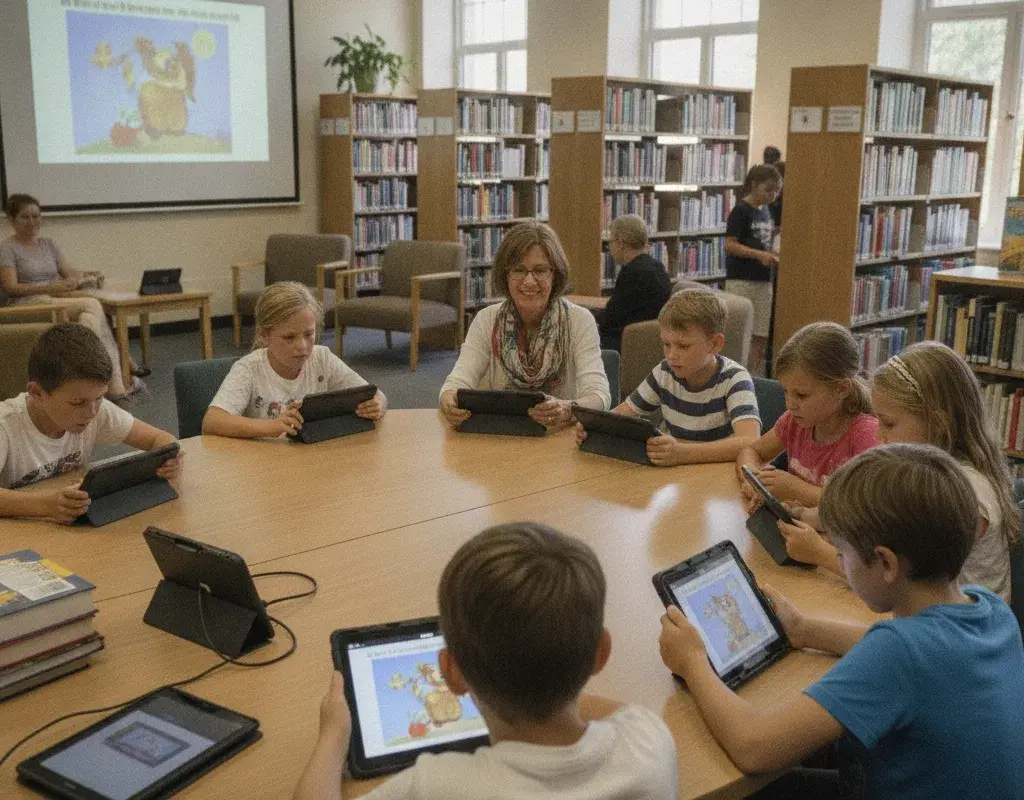
As summer break settles in, parents and educators often face the daunting task of preventing the summer slide, that frustrating dip in academic progress that happens when students step away from the classroom. While the instinctive reaction to combat too much screen time is to simply ban devices and hand over a paperback, some experts suggest a more nuanced approach. School librarians argue that when used intentionally, digital tools can actually serve as a bridge to literacy rather than a barrier, providing essential access to stories for children who might not have easy transportation to a local public library.
Angela Husband, a veteran media specialist in Cleveland, notes that her role has evolved alongside technology. Rather than competing with screens, she uses them to expand the library’s reach beyond school walls. By utilizing platforms like Sora, students can dive into thousands of e-books and audiobooks right from their phones, participating in reading challenges and earning badges that gamify the experience. Similarly, Amanda Hunt from Texas highlights apps like Comics Plus, which opens the world of manga and graphic novels to multiple students simultaneously, removing the traditional waitlist frustration associated with popular print titles.
There is also a growing push to dismantle the old stigma surrounding audiobooks. Both Husband and Hunt emphasize that listening to a story requires many of the same cognitive muscles as reading one on a page, including vocabulary acquisition and critical analysis of plot and character. For reluctant readers or those who struggle with traditional text, these auditory options provide a low-pressure entry point into storytelling. Furthermore, digital platforms allow kids to form virtual book clubs, turning what is often a solitary activity into a social experience that keeps them engaged throughout July and August.
Ultimately, these educators aren’t suggesting that tablets should replace paper entirely but rather that they should exist as part of a balanced diet of reading materials. The goal isn’t necessarily more screen time for its own sake, but rather using every available tool to foster a genuine love for narratives. Whether it is through a sleek tablet or a dusty hardcover, any method that encourages a child to remain curious and active in their reading habits is considered a victory for long-term literacy.