Halfway between Scotland and Iceland, the Faroe Islands feel like a place where the weather writes the itinerary. Mist rolls over grassy peaks one minute and sunlight bursts across the sea the next. The best way to experience this moody, magnificent archipelago is behind the wheel, following the Buttercup Routes, a network of short scenic byways marked by little yellow flower signs. Each one is designed to be driven slowly, with plenty of excuses to stop and stare.
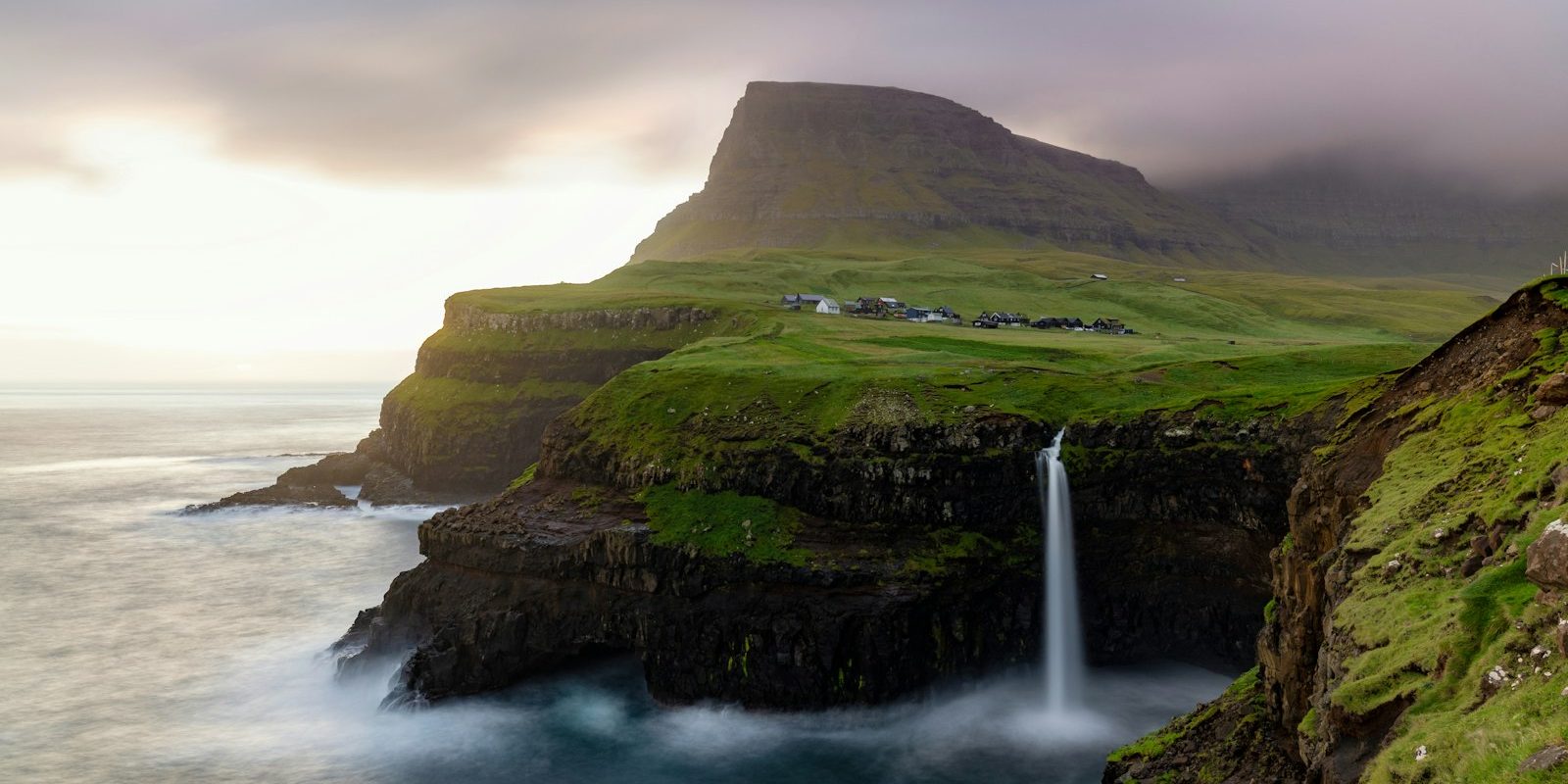
Begin on Vágar, where the airport sits, and head straight for Gásadalur, a tiny village perched above the Múlafossur waterfall as it pours straight into the Atlantic. From the capital, Tórshavn, roads lead north to Gjógv, a fishing village named for the narrow sea gorge that slices through it, and over a mountain pass to Tjørnuvík's black-sand beach. Along the way, look for Risin and Kellingin, two sea stacks said to be a giant and a witch frozen in stone.
Tunnels, puffins and supper with locals
Getting around is an adventure in itself. Remarkable undersea tunnels now link several islands, some glowing with artistic light installations, and one even features a roundabout deep beneath the ocean. Hairpin mountain roads reward patience with jaw-dropping fjord views. Between spring and late summer, keep your binoculars handy for puffins nesting on the cliffs, and pull over often: the drives are short, but the views have a way of stretching the hours.
The most memorable meal might happen in someone's living room. Heimablídni, the Faroese tradition of home hospitality, lets visitors book dinner with local families, often featuring lamb from their own flock and traditional wind-dried specialties. Plan these ahead, along with a rental car, since buses are infrequent. Pack waterproof layers for fog, wind and sudden showers, leave extra time on every route, and embrace the unpredictable skies as part of the islands' wild charm.