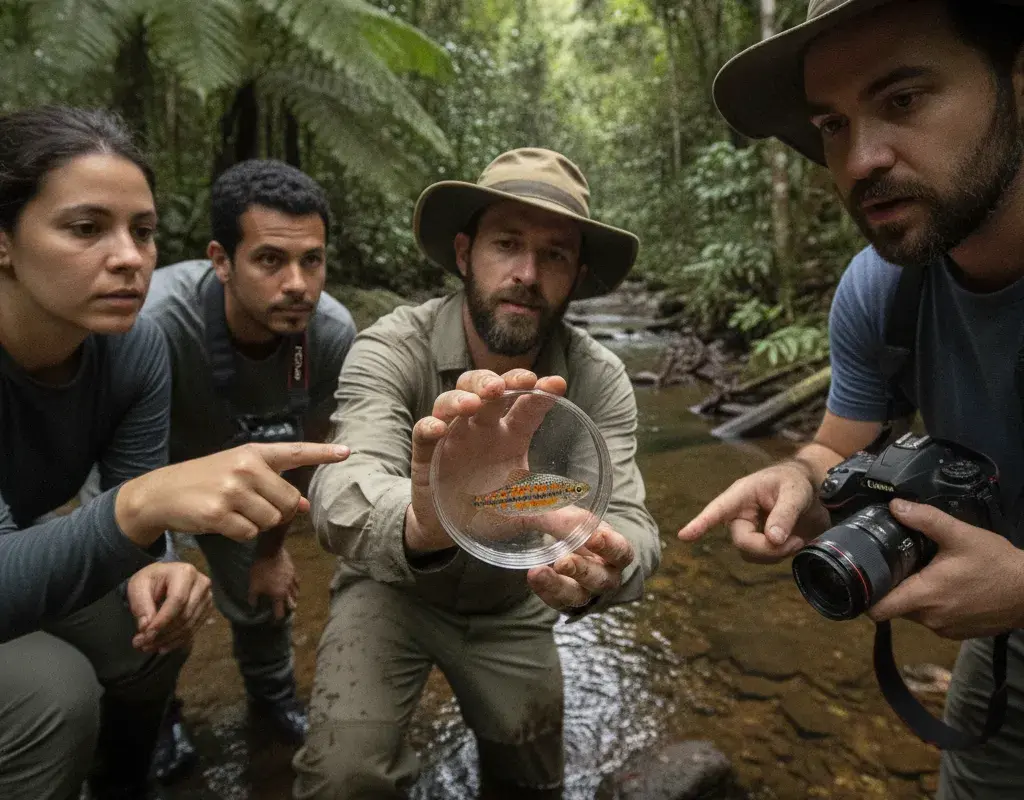
Deep within the dense forests of the Brazilian Amazon, a splash of vibrant color has revealed a biological secret. Dr. Waldir Miron Berbel-Filho, an assistant biology professor at the University of West Florida, has led an international effort to identify a previously unknown species of killifish. Found in the Rio Cajari drainage in Amapá, the tiny creature measures just over an inch long and is distinguished by bright orange spots and bars set against a pale gray body. Appropriately named Laimosemion laranja, which references both its vivid hue and the local county where it was discovered, the fish represents a significant win for biodiversity research.
The discovery was far from accidental, resulting from rigorous fieldwork conducted alongside experts from several Brazilian institutions. To confirm that they had indeed found something new to science, the team employed a combination of morphological comparisons and genetic sequencing. By analyzing everything from skeletal structures and scale counts to mitochondrial DNA, researchers were able to distinguish this specific population from other known killifish. However, the excitement of the find is tempered by immediate concerns for the animal’s survival. Because the species exists in an incredibly limited range of less than ten square miles, it faces severe threats from plastic pollution, mining runoff, and deforestation.
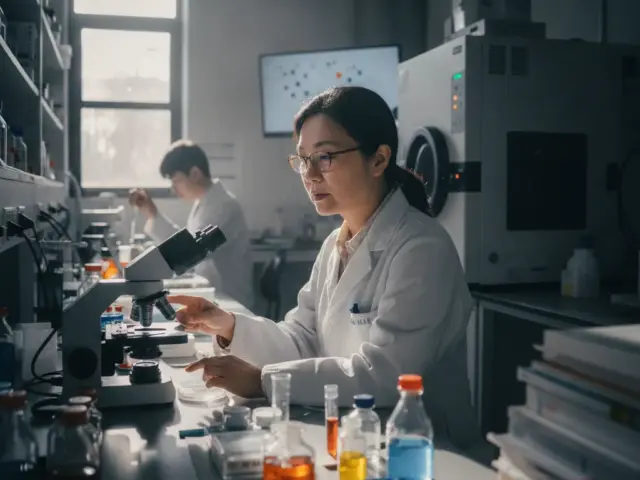
Beyond simply cataloging a new resident of the rainforest, this project serves a much larger purpose regarding the mysteries of longevity and genetics. The search for this fish was part of a broader study exploring how certain killifish evolve to survive in temporary water sources—an adaptation often linked to rapid aging and shortened lifespans. Dr. Berbel-Filho notes that understanding these molecular mechanisms could eventually provide insights into human health and medicine. This spirit of global cooperation continues today at UWF through visiting scholars who are helping bridge the gap between field exploration in South America and high-level laboratory analysis in Florida.