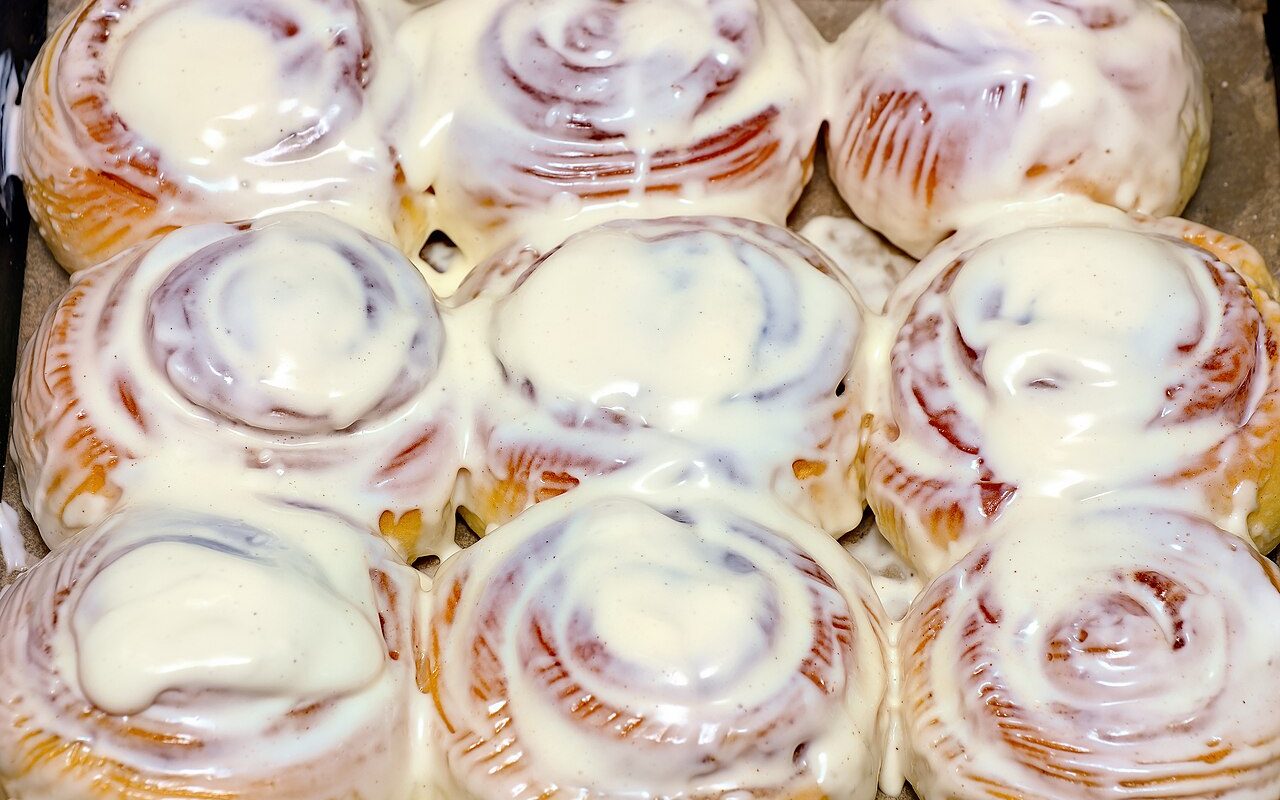
If your homemade cinnamon rolls are gorgeous on day one and sad by breakfast the next morning, there's a gentle fix worth knowing: tangzhong. The idea is simple. Before you mix your dough, you take a small part of the recipe's flour and liquid and cook them together into a thick, pudding-like paste. That paste then goes into the dough with everything else, and it quietly changes the texture of the finished bread.
The technique has roots in Japan, where similar methods are called yudane or yukone, and it was popularized across Asia by Taiwanese cookbook author Yvonne Chen. It's the reason Japanese milk bread has that famously feathery, tear-apart crumb. The science is neat: heating flour in liquid makes its starch granules swell and soak up water, so the dough can hold more moisture than usual. Around 149°F is the sweet spot, but you don't need a thermometer. Just whisk until it turns thick and paste-like.
- Stovetop or microwave both work. In the microwave, use a big bowl and heat in 20-second bursts, whisking in between.
- Plant milks such as oat, soy or almond can stand in for dairy one-to-one; the paste may just look a little darker.
- King Arthur's softest cinnamon rolls cook about 7 percent of the total flour this way, more than their milk bread.
In a side-by-side test from King Arthur's bakers, the rolls with and without tangzhong were both lovely fresh from the oven. The difference showed up later. By the next day, the plain rolls had dried out, while the tangzhong batch stayed tender and, after a quick rewarm, tasted almost freshly baked even several days on. For a weekend baking project, that's a pretty great return on one extra pot.
Source: King Arthur Baking