For many people raised in the wake of the twentieth century, the blueprint for adulthood was simple and rigid. Success meant climbing the property ladder, securing a private sanctuary, and insulating the nuclear family from the unpredictability of the outside world. It is a script that promises autonomy and control, yet often delivers a quiet, creeping loneliness. One woman found herself following this trajectory perfectly, moving from a successful career at the BBC to the stability of a small home with her partner and children, only to realize that the walls providing her privacy were also creating a profound sense of isolation.
The turning point came when she recognized that the modern obsession with individual accumulation was not just socially draining but practically unsustainable. In her previous work at a think tank, she noticed a recurring theme across every societal crisis, from mental health epidemics to environmental collapse: a fundamental disconnection from other humans. She began to view the traditional path toward suburban seclusion as a tide that pulls people apart precisely when they need each other most. The freedom to optimize every aspect of one’s life according to personal preference comes with an invisible cost—an existential weightlessness and a lack of genuine support systems during life’s hardest moments.
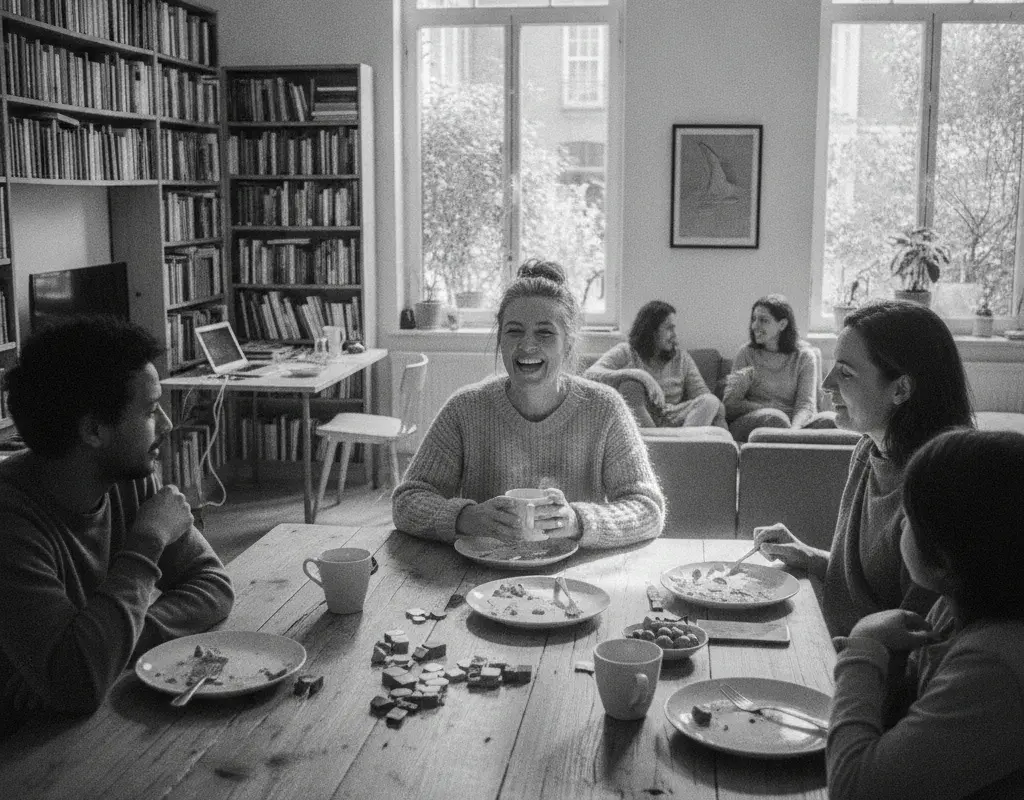
This realization evolved into an act of rebellion against the buffered self. Driven by the anxieties of motherhood and a warming planet, she abandoned the dream of total privacy in favor of a chaotic, crowded London terrace shared with several other households. Life shifted from scheduled coffee dates and polished group chats to a raw, unfiltered existence where boundaries blur and mutual aid is mandatory. There is no longer any room for the curated version of oneself when your living room becomes a makeshift delivery ward for a housemate in labor or your daily routine involves scrubbing bloodstained towels while managing childcare for multiple families simultaneously.
Living in such proximity acts as a mirror that reflects truths we usually hide behind closed doors. While society often views communal living as something reserved for students or those lacking means, this experiment suggests it may actually be a sophisticated strategy for survival. By trading some degree of control for deep reciprocity, these residents are discovering that true security doesn’t come from owning more square footage or having thicker walls, but from being woven into a thick web of humans who refuse to let one another struggle alone.